This website use cookies to ensure you get the best experience on our website

5 Building Systems. 1 Dashboard. How Atamate Reduced Property Running Costs
Discover how Atamate transformed a five-flat short-term let property near Cardiff Bay with intelligent building automation. By bringing heating, lighting, ventilation, hot tub controls, keyless access and energy monitoring into one dashboard, atBOS helped reduce costs, improve energy efficiency and simplify day-to-day property management.

How Algeco Cut Portable Site Accommodation Energy Use by 30% with Atamate
Discover how Atamate helped Algeco reduce energy consumption by 30% across a 48-bay portable accommodation complex, saving 59,879 kWh and £16,766 in just 10 months. Using smart, occupancy-based heating controls and wireless technology, atBOS reduced energy waste without replacing existing equipment.
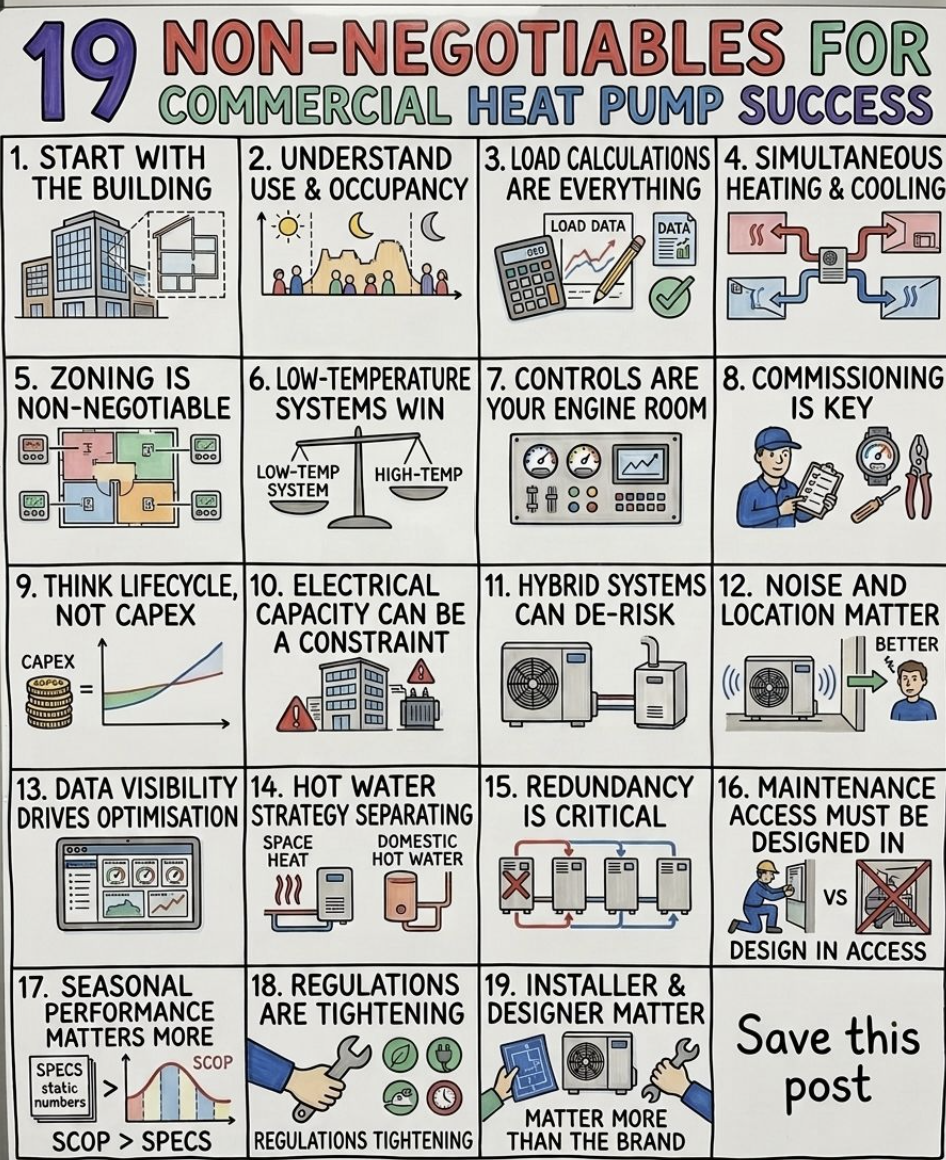
19 non-negotiables for commercial heat pump success
Poor planning is where most commercial heat pump projects go wrong. Here are the 19 things you need to get right, from load calculations and zoning to controls, commissioning and real-world SCOP.
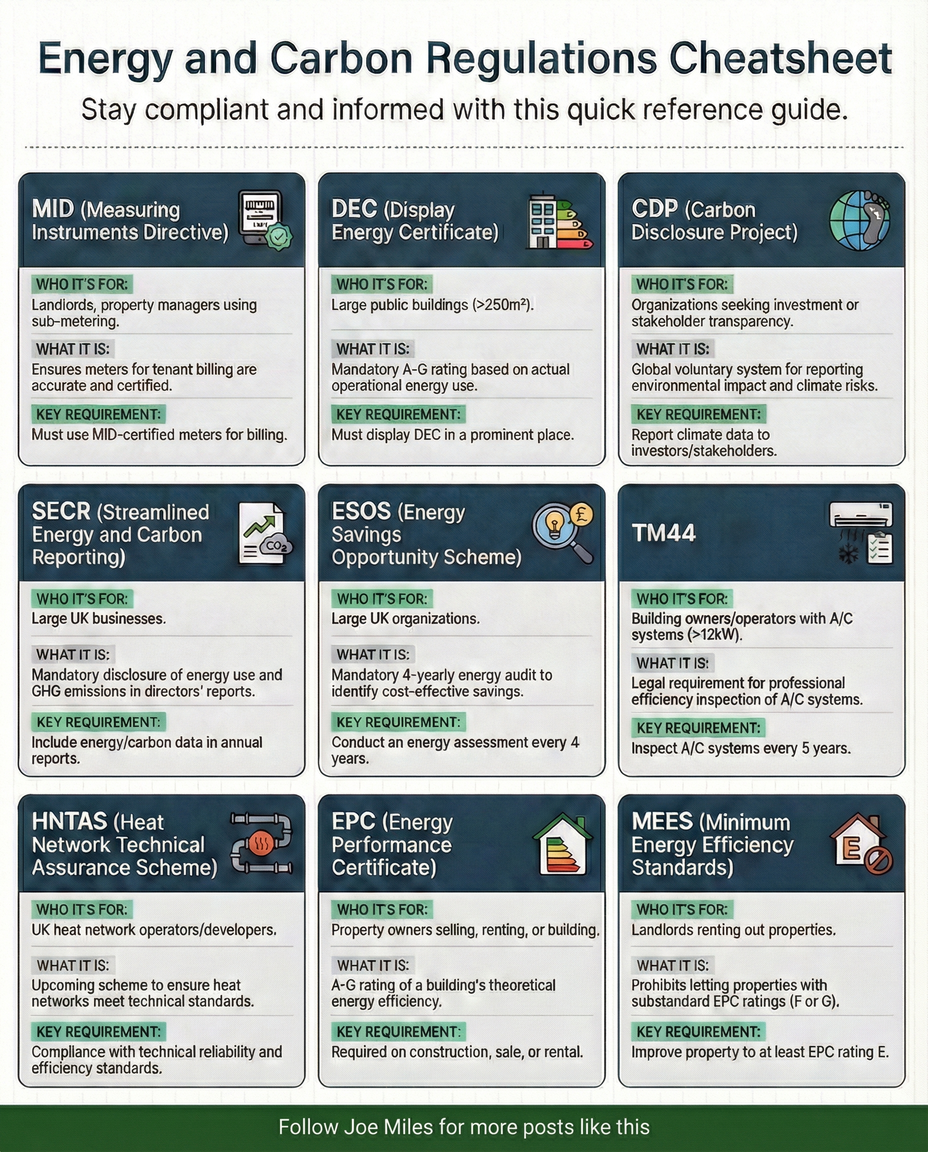
Energy and Carbon regulations
UK building regulations shouldn't just be viewed as compliance headaches. By leveraging granular energy data and understanding building physics, owners can transform mandatory reporting into actionable insights that unlock superior energy efficiency and lower bills.
The building industry has it backwards
Traditional building management systems lock valuable energy data on-site due to security concerns, making remote optimisation impossible. Adopting secure remote access enables experts to analyze performance and improve efficiency, helping buildings hit their energy targets.
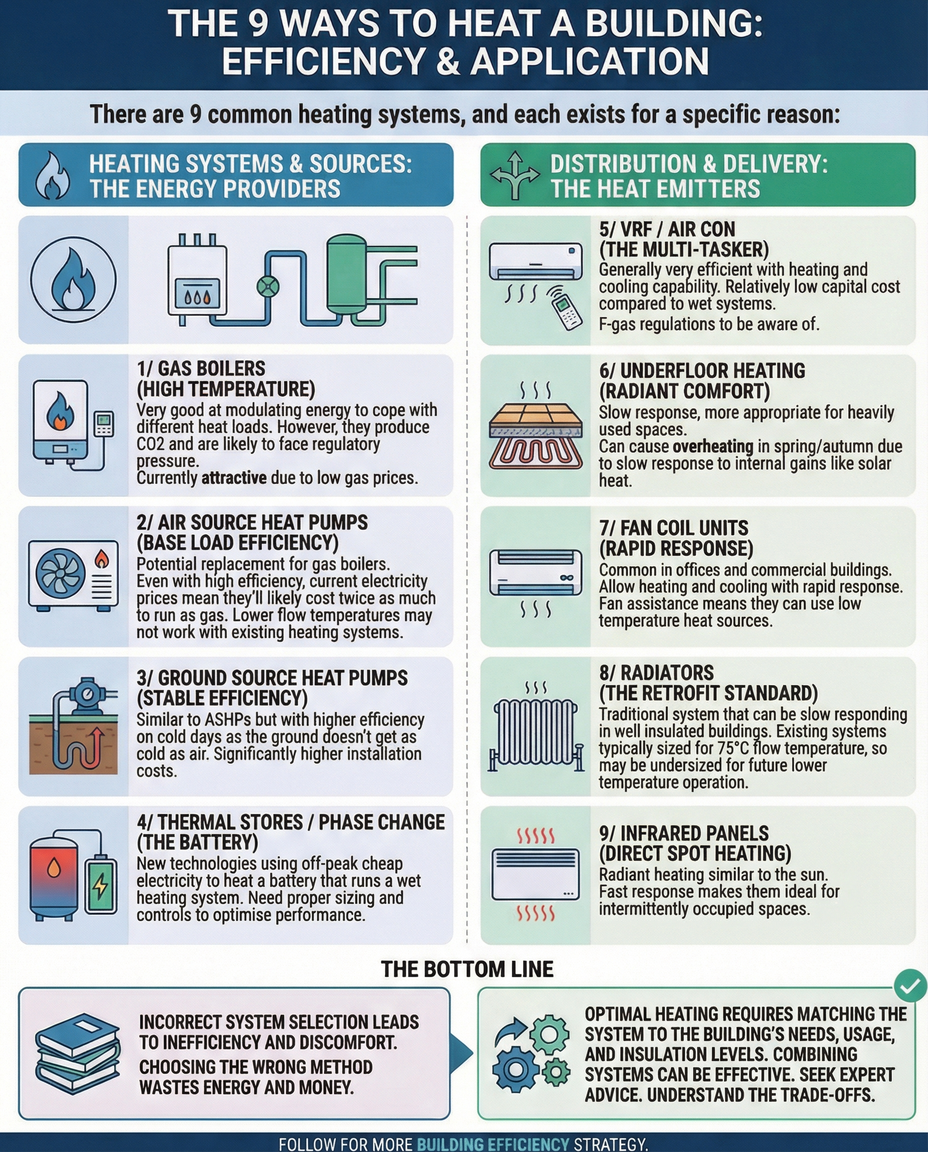
9 Options for electrical heating
The post discusses decarbonising buildings by replacing gas and oil boilers with electrical heating and emphasizes that to choose the right system, you need to understand how the building is used and its thermal performance rather than relying solely on traditional, flawed modelling. Additionally, your post on the "Performance Gap" covers related themes regarding operational performance and the transition to electric heating.
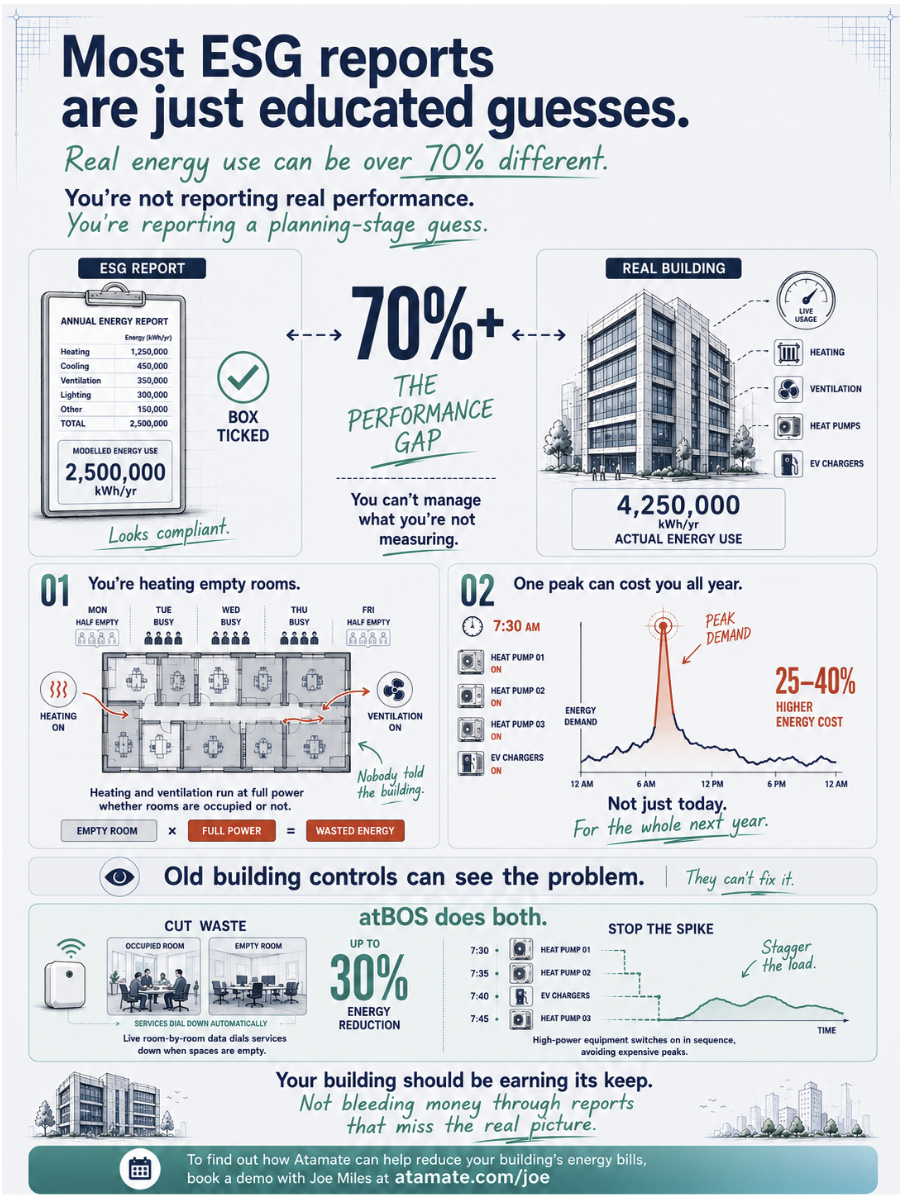
Most ESG reports are educated guesses. Here’s what that’s costing you
UK and EU building owners now have to report energy use by law, but most rely on design estimates that can be off by up to 70%. Here’s how that gap drives wasted energy and costly peak bill spikes, and how atBOS uses live room-by-room data to fix both.
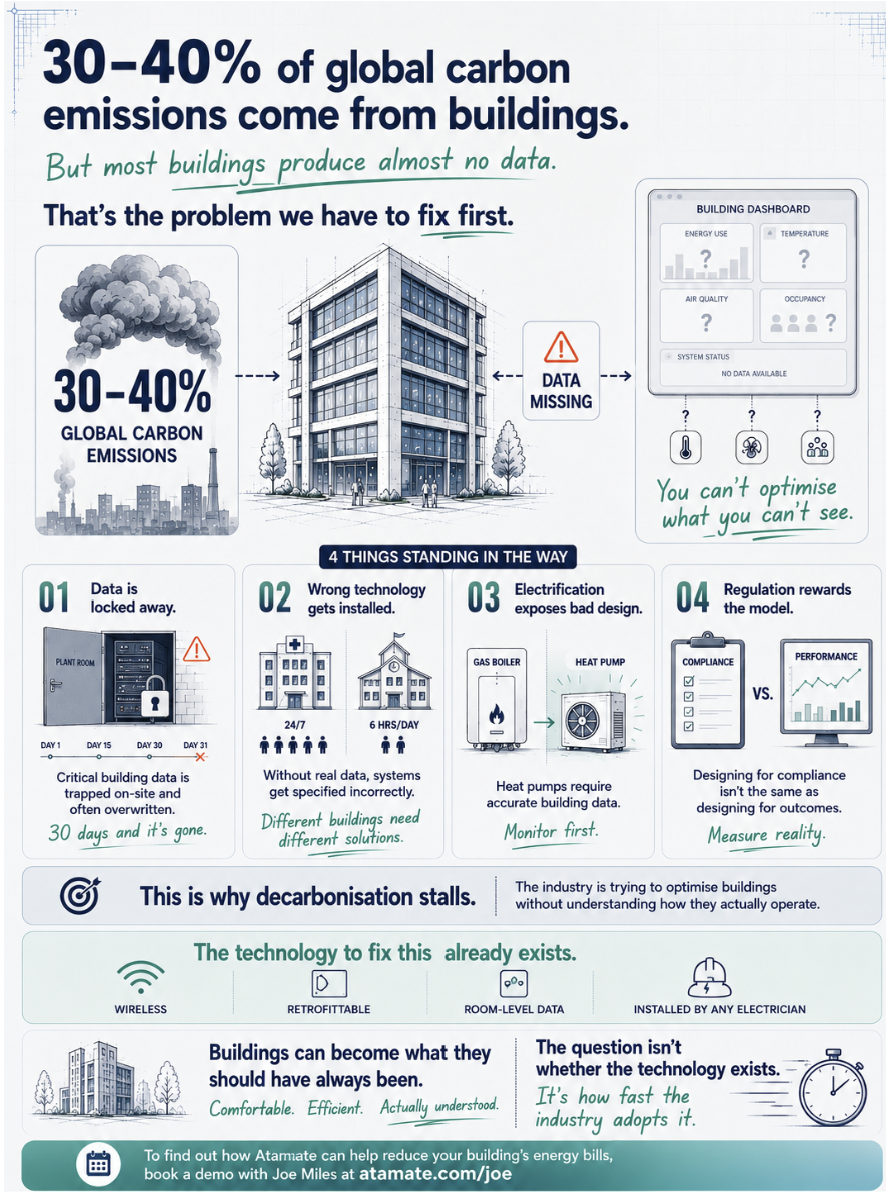
4 things standing in the way of decarbonising commercial buildings
Buildings produce 30-40% of global carbon emissions, yet most generate almost no usable data. After 15 years working on the problem, here are the four things I’ve seen holding back commercial building decarbonisation, from lost plant room data to badly sized heat pumps.v
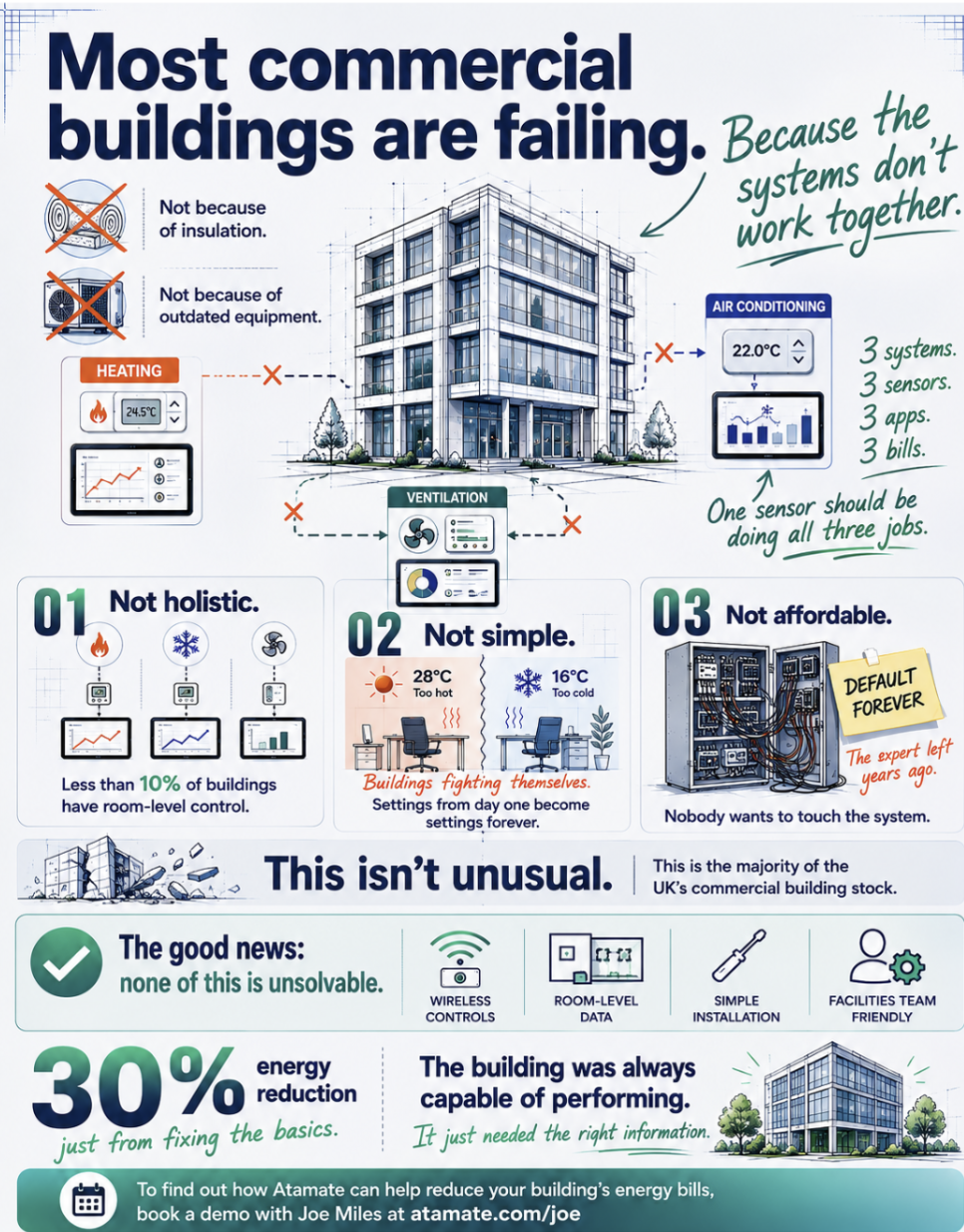
3 reasons commercial buildings underperform (and how to fix them)
After 30 years developing low-energy buildings, I’ve seen the same problems on every site. Here are the 3 reasons most commercial buildings underperform, and how wireless, room-level controls are delivering 30% energy savings by fixing the basics.
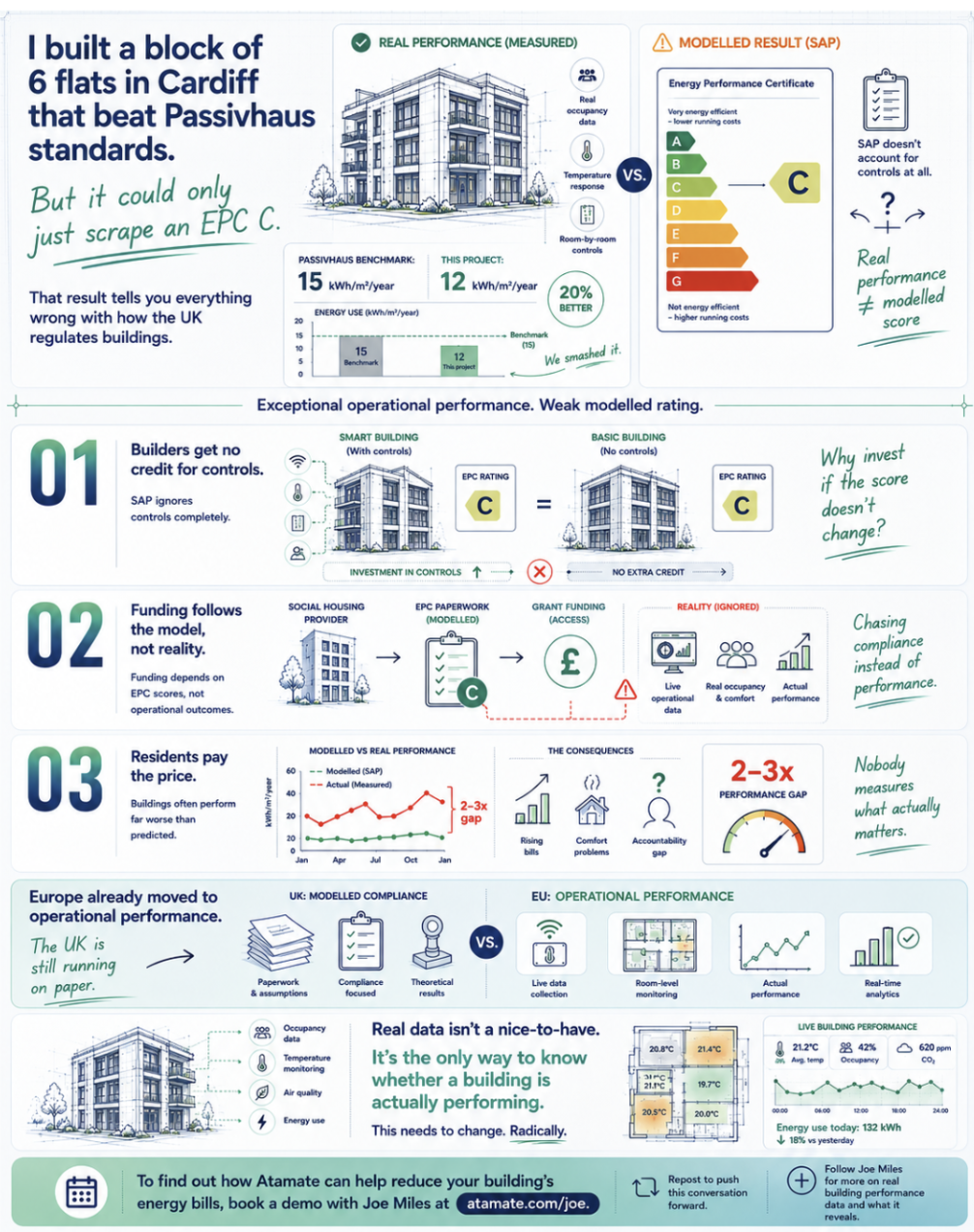
My flats beat Passivhaus and still only scraped an EPC C
I built a block of 6 flats in Cardiff that beat Passivhaus standards, yet it could only just scrape an EPC C. Here’s why SAP ignores controls and real performance, and what that means for builders, social housing providers and the residents paying the bills.
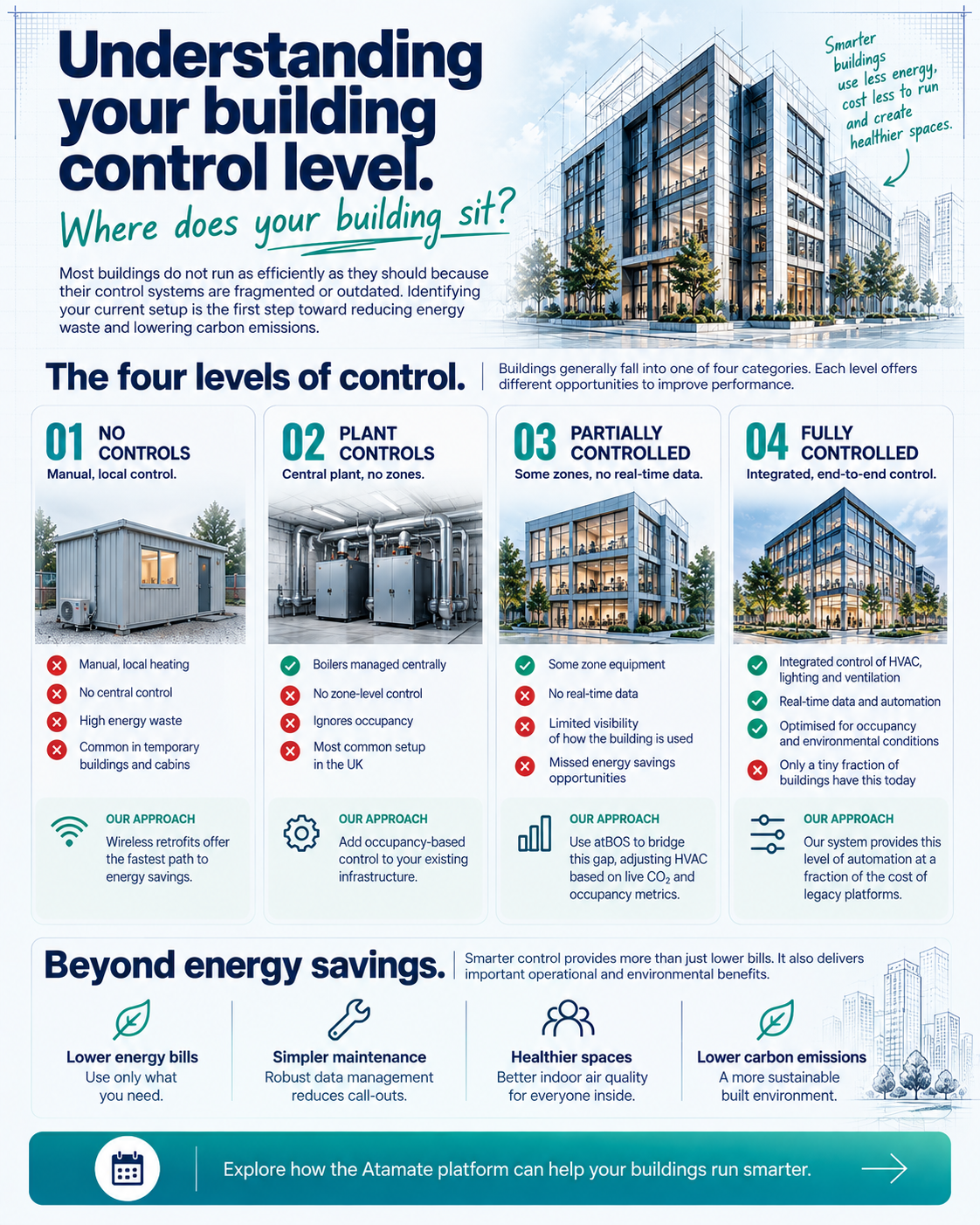
Your building has controls. But is it actually controlled?
Having building controls doesn't mean your building is truly controlled. Discover where your building sits on the four-level Building Control Sophistication Index and how smarter, real-time HVAC control can reduce energy costs, cut carbon emissions, simplify maintenance and improve indoor environments.
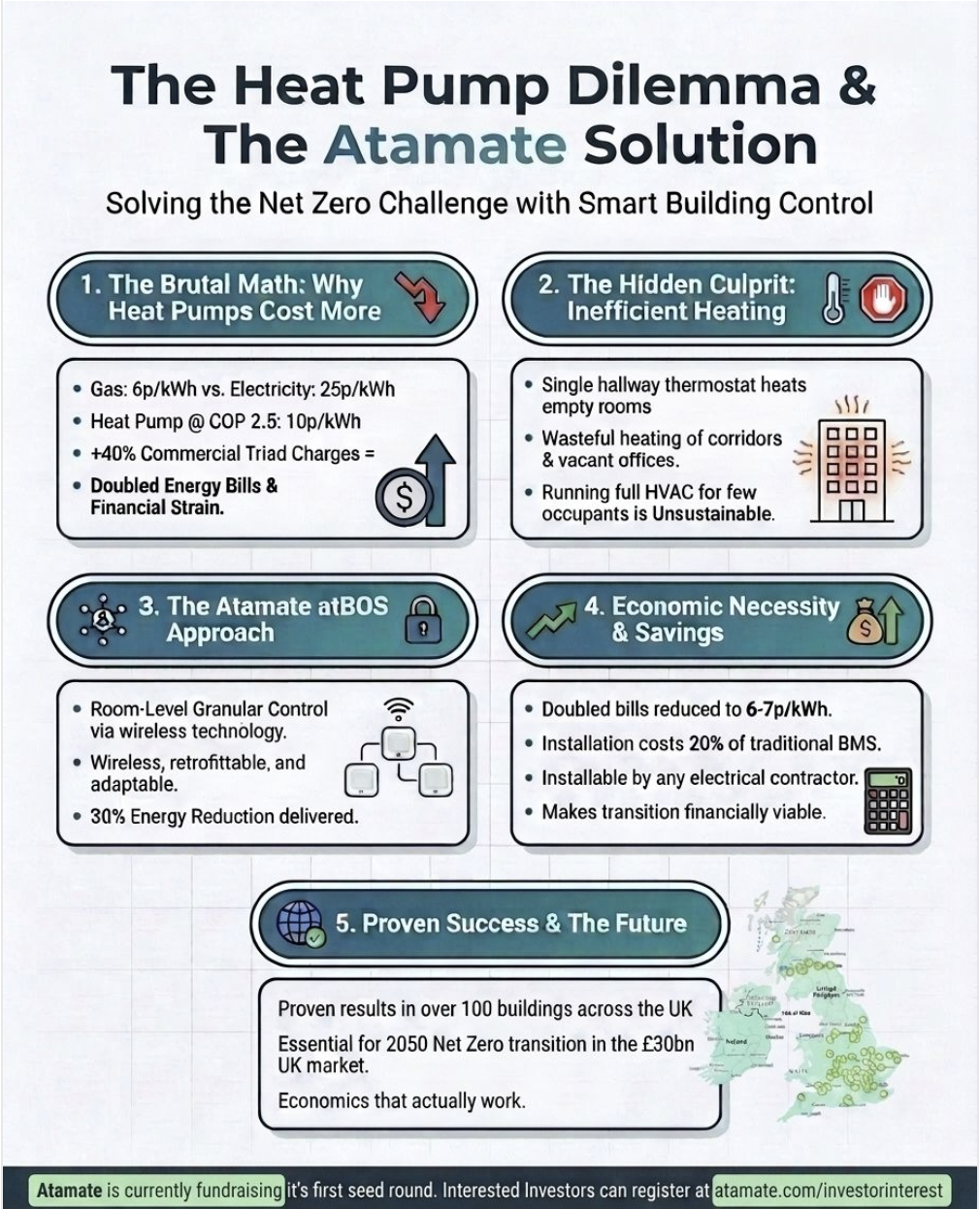
The heat pump paradox: why building control is now a necessity
Switching from gas to heat pumps can nearly double effective heating costs for commercial buildings. Here’s why room-level control is the key to making the economics work, and how atBOS brings costs back down to 6-7p per kWh.
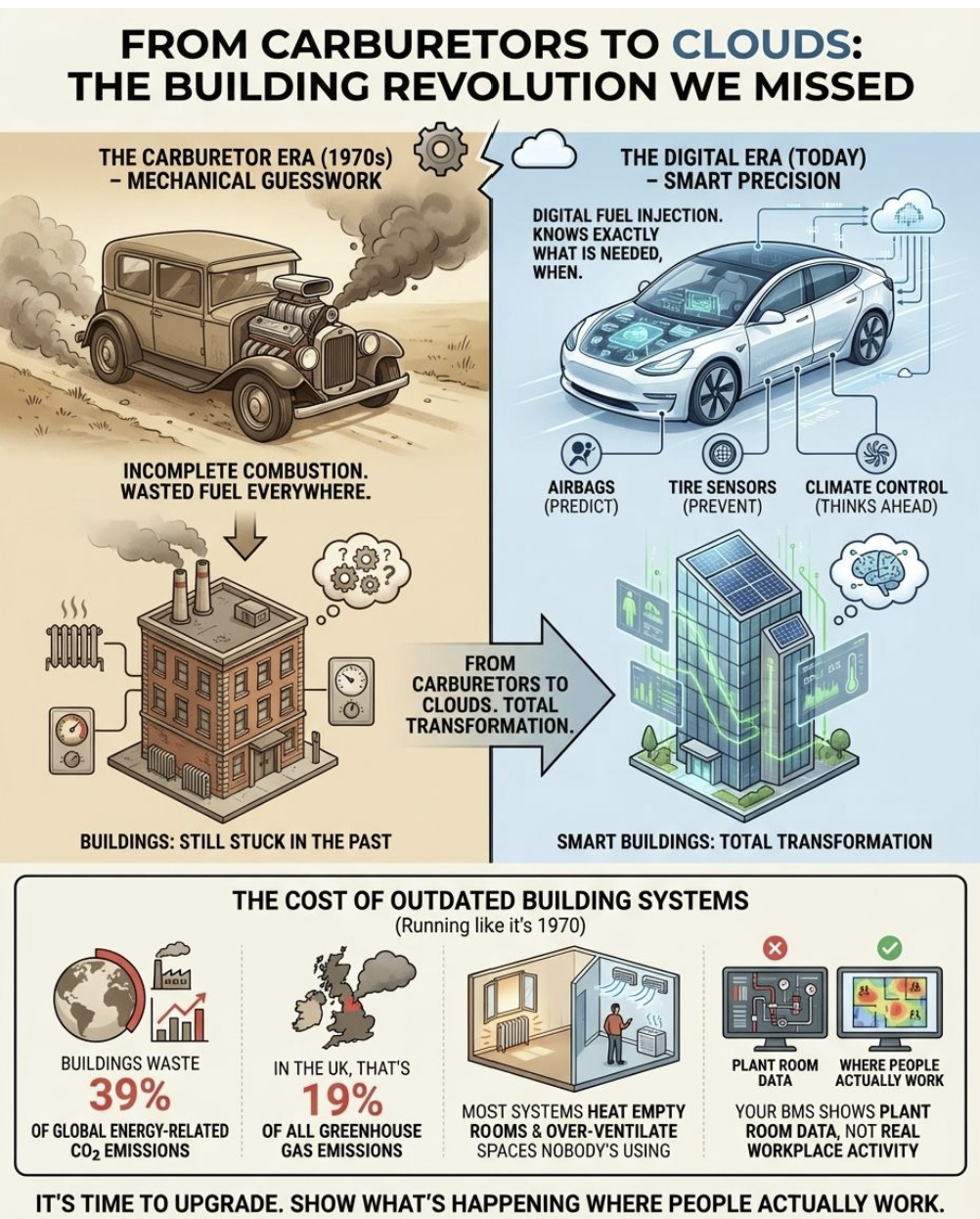
Why buildings are still running on carburettors
Cars swapped carburettors for digital fuel injection decades ago, and it transformed what they could do. Buildings are still waiting for that moment. Here’s how atBOS brings room-level data and control to buildings, and what it means for energy use.
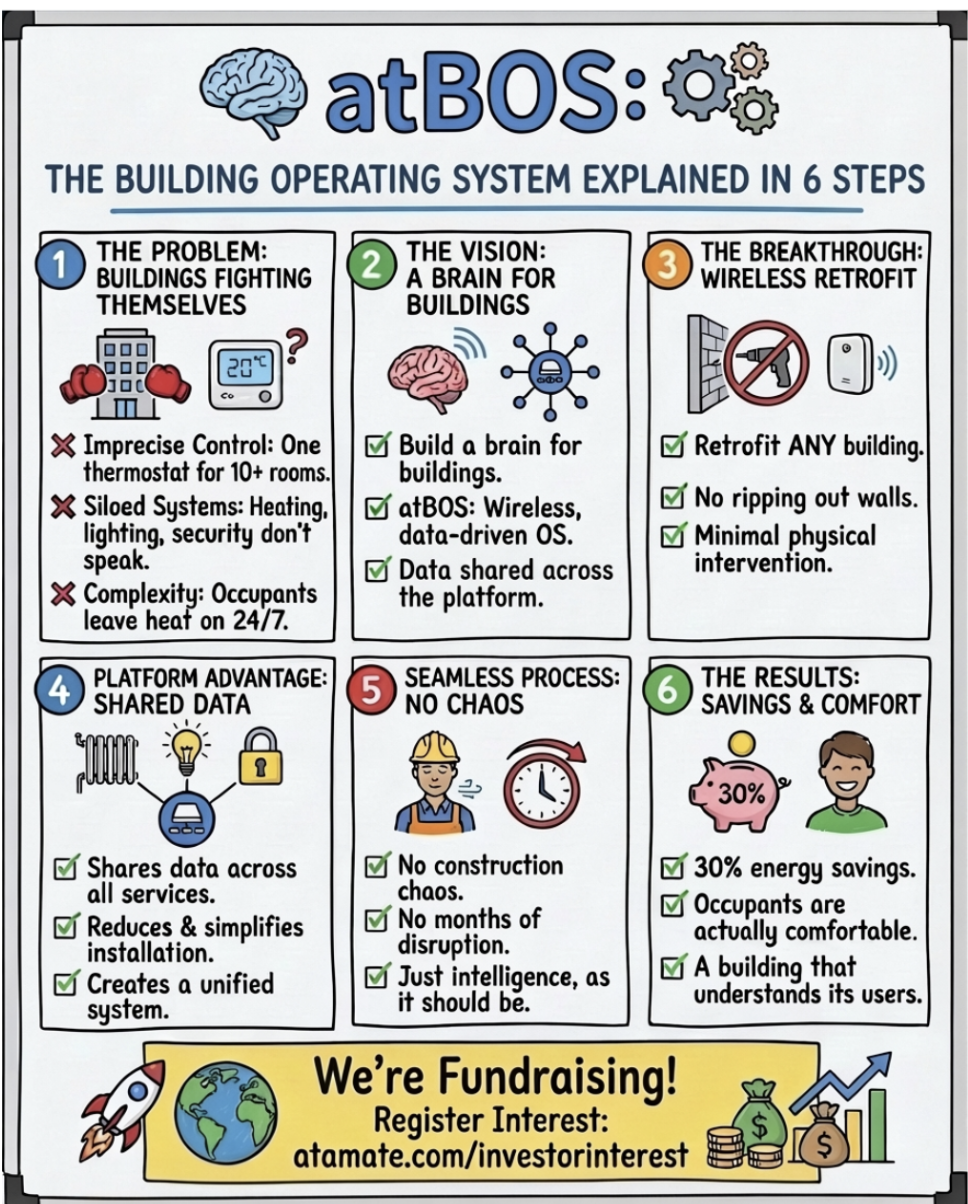
Why I built a brain for buildings
Every building I retrofitted across central London was fighting against itself. Here’s what I kept seeing on site, and how it led me to build atBOS, a wireless operating system that can retrofit any building and cut energy use by 30%.
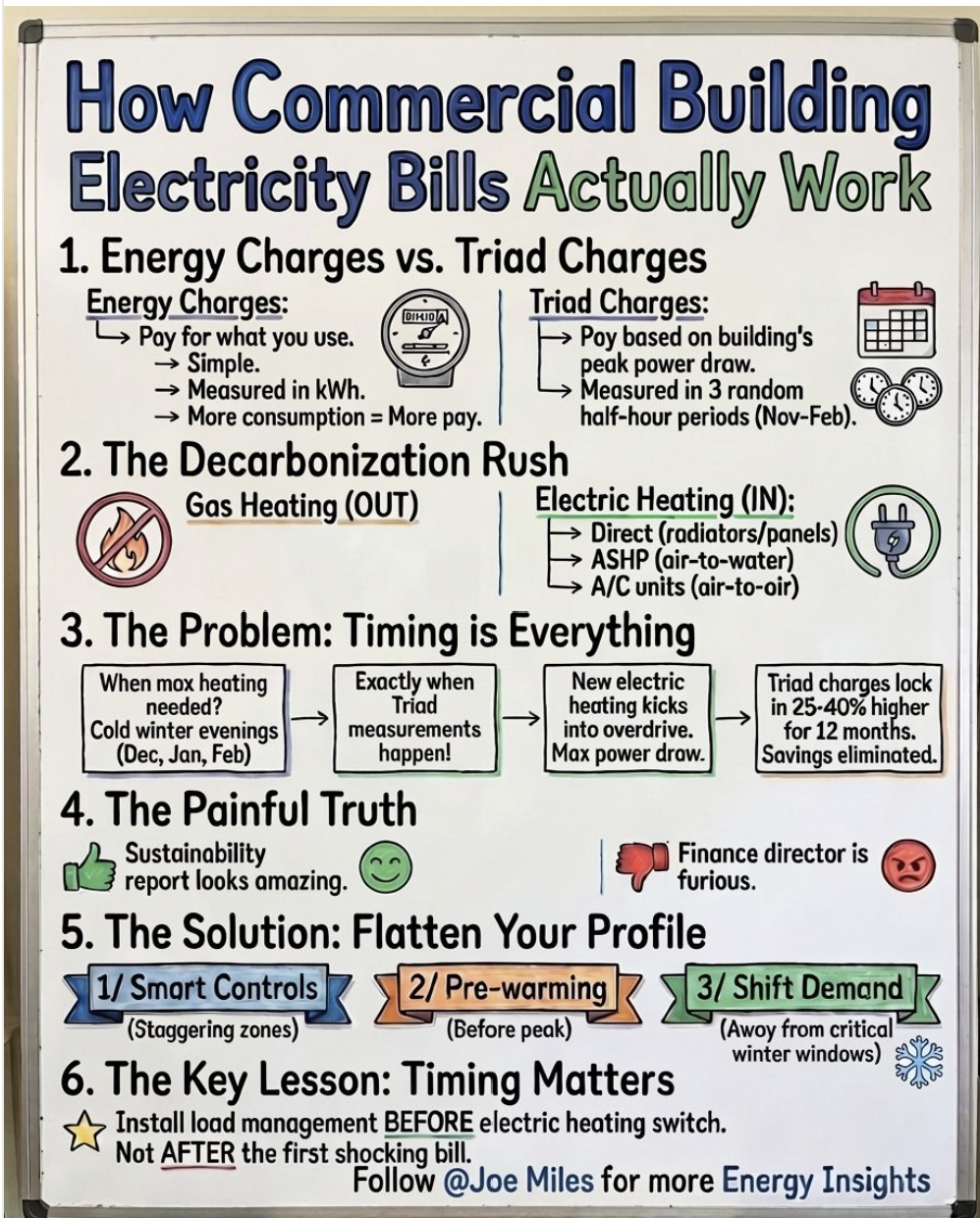
The hidden winter cost of electric heating
Commercial electricity bills charge for peak demand as well as usage, and electric heating pushes that peak up just when the grid is most expensive. Here’s why switching from gas can drive bills up, and how smart load management keeps costs in check.
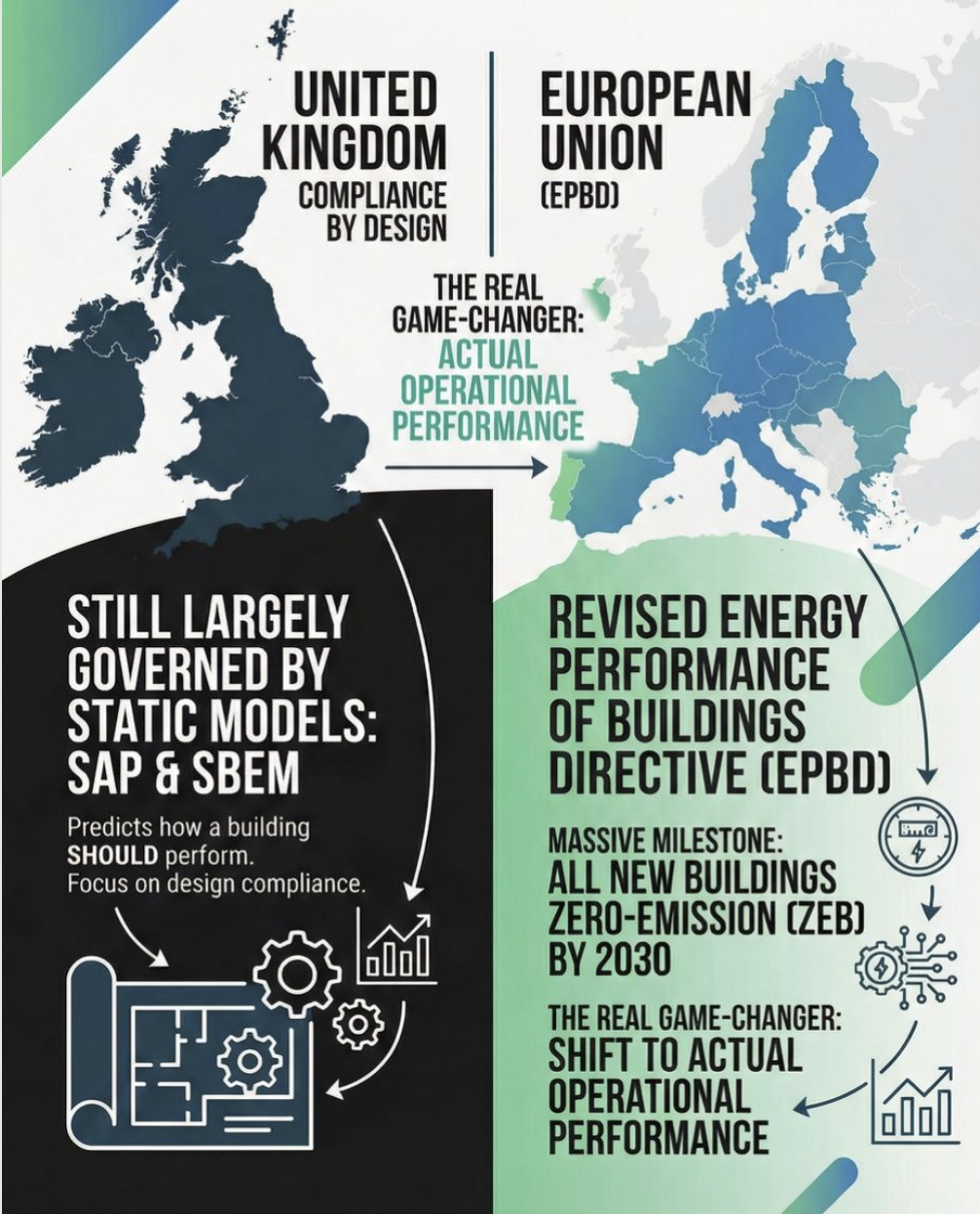
The performance gap: why building models get it wrong
Buildings routinely use 2 to 3 times more energy than SAP and SBEM models predict. Here’s why the performance gap exists, how Europe’s revised EPBD is shifting the focus to real-world performance, and what high-quality building data reveals.
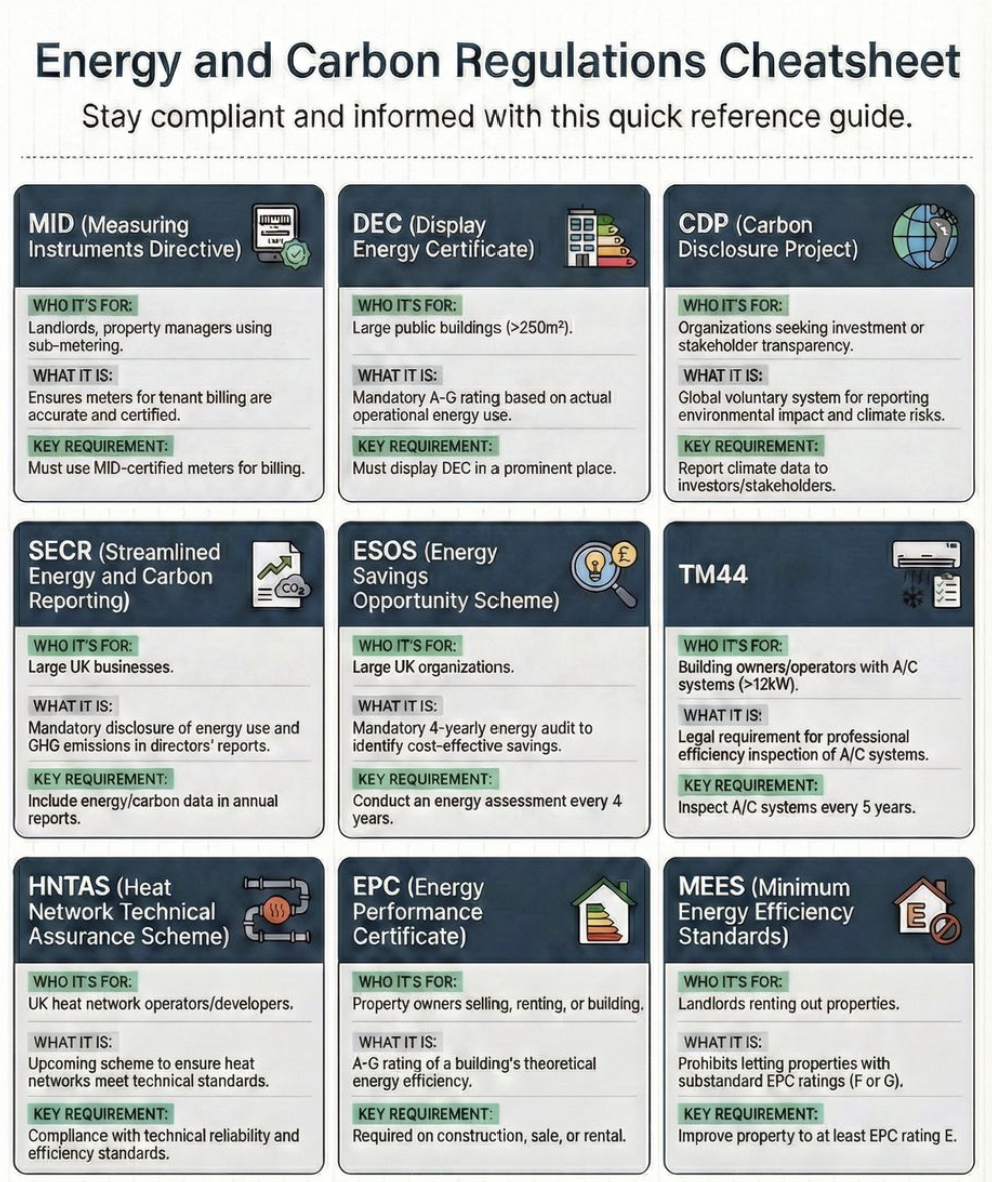
UK building regulations as a roadmap to better performance
MID, DEC, SECR, ESOS, EPC, MEES: UK building regulations can feel like alphabet soup. Here’s how the smartest building owners use them as a roadmap to better performance, plus a cheat sheet of what each one requires.
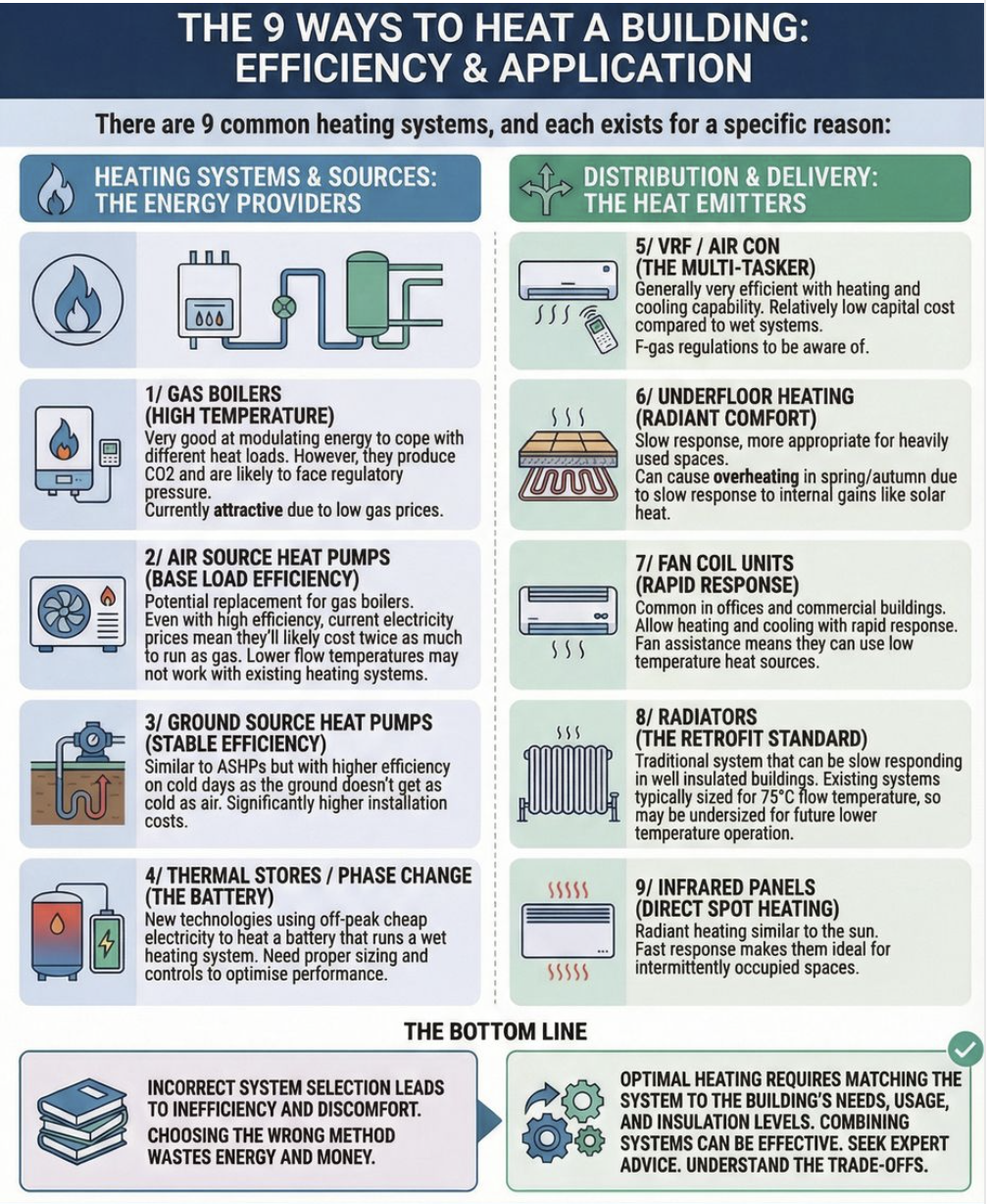
9 heating systems and when to use each one
Swapping gas boilers for electric heating means choosing between 9 common systems, from heat pumps to infrared panels. Here’s what each one does best, and why understanding how a building is used matters as much as how well it’s insulated.