The hidden winter cost of electric heating
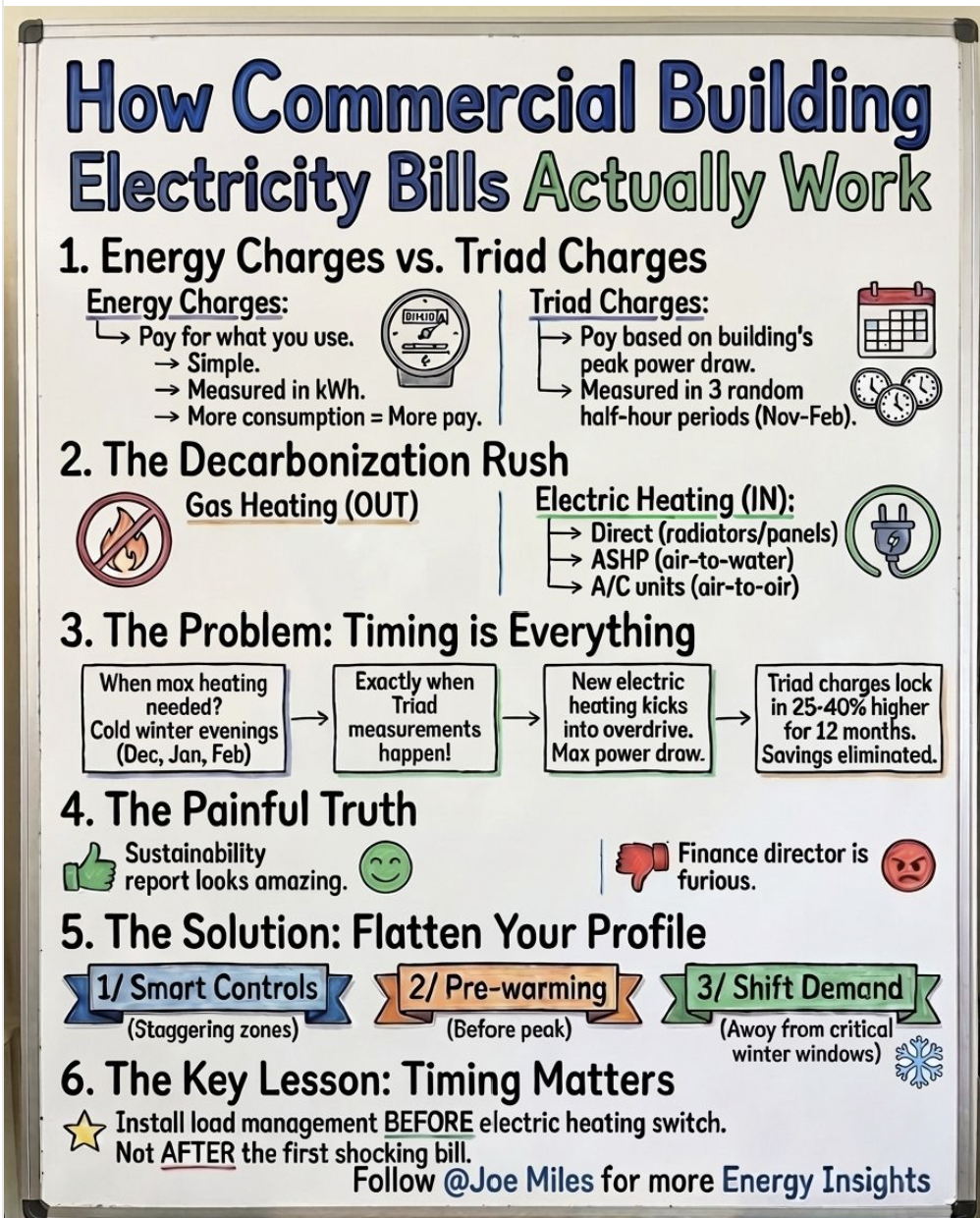
Most commercial building owners don't understand how their electricity bills actually work.
Until they get hit with a 40% increase.
Here's what nobody explains clearly: Commercial electricity bills have two separate charges.
𝗘𝗻𝗲𝗿𝗴𝘆 𝗰𝗵𝗮𝗿𝗴𝗲𝘀: Pay for what you use. Simple. Measured in kilowatt-hours. The more you consume, the more you pay.
𝗧𝗿𝗶𝗮𝗱 𝗰𝗵𝗮𝗿𝗴𝗲𝘀: Pay based on your building's peak power draw during just 3 random half-hour periods between November and February.
Read that again. Three half-hour windows. Four months of the year. Random timing.
Those 3 readings determine a significant portion of your electricity charges for the entire following year.
Think the grid operator tells you when they're measuring? They don't. You find out after the fact.
Here's why this suddenly matters: Commercial buildings are rushing to decarbonize. Gas heating is out. Electric heating is in.
Your options are:
→ Direct electrical heating (electric radiators and infrared panels)
→ Air Source Heat Pumps (air to water systems)
→ Air conditioning units (air to air heat pumps)
Plus all those EV charging points in the car park.
Your sustainability credentials look great. Your carbon footprint shrinks.
But here's the problem: When does your building need maximum heating power?
Cold winter evenings when everyone's still working. December deadlines.
January deep freeze. February storms.
Exactly when those Triad measurements happen.
Your new electric heating system kicks into overdrive during peak winter moments. Your building draws maximum power from the grid. Those 3 readings capture your highest consumption.
Your Triad charges lock in at 25-40% higher for 12 months.
Your efficient heating system just eliminated its own cost savings.
Every month, more commercial building owners discover this painful truth.
They followed all the decarbonization guidelines. Installed efficient heat pumps. Replaced gas with electric systems.
Their sustainability report looks amazing.
Their finance director is furious.
The solution isn't avoiding electric heating. That ship sailed with carbon regulations.
The solution is flattening your energy consumption profile.
Smart control systems can stagger when different zones heat up. Pre-warm spaces before peak periods hit. Shift electrical demand away from those critical winter windows.
Your heating works better. Your bills stay manageable. Your sustainability targets get met.
But timing matters. Install load management before you switch to electric heating. Not after the first shocking bill arrives.
At Atamate, we help commercial buildings flatten their consumption profiles to avoid exactly this trap. Because going green shouldn't bankrupt your operating budget.
Have you been hit by unexpected charges after upgrading to electric heating? Book a call with Joe Miles to discuss atamate.com/joe.