9 heating systems and when to use each one
You're about to invest in decarbonising your building. There's a 70% chance you'll pick the wrong system.
Decarbonising buildings means replacing gas and oil boilers with electrical heating.
How do we choose the right systems to install?
The key factors are thermal performance (how well insulated) and how the building is used.
Direct electrical heating may be cheaper and lower carbon in poorly insulated, infrequently used rooms.
Similarly putting a slow response wet system (radiators or UFH) in a well insulated space may be very wasteful as it is likely to overheat even in the middle of winter. You often see all the windows open on council blocks in winter for this reason.
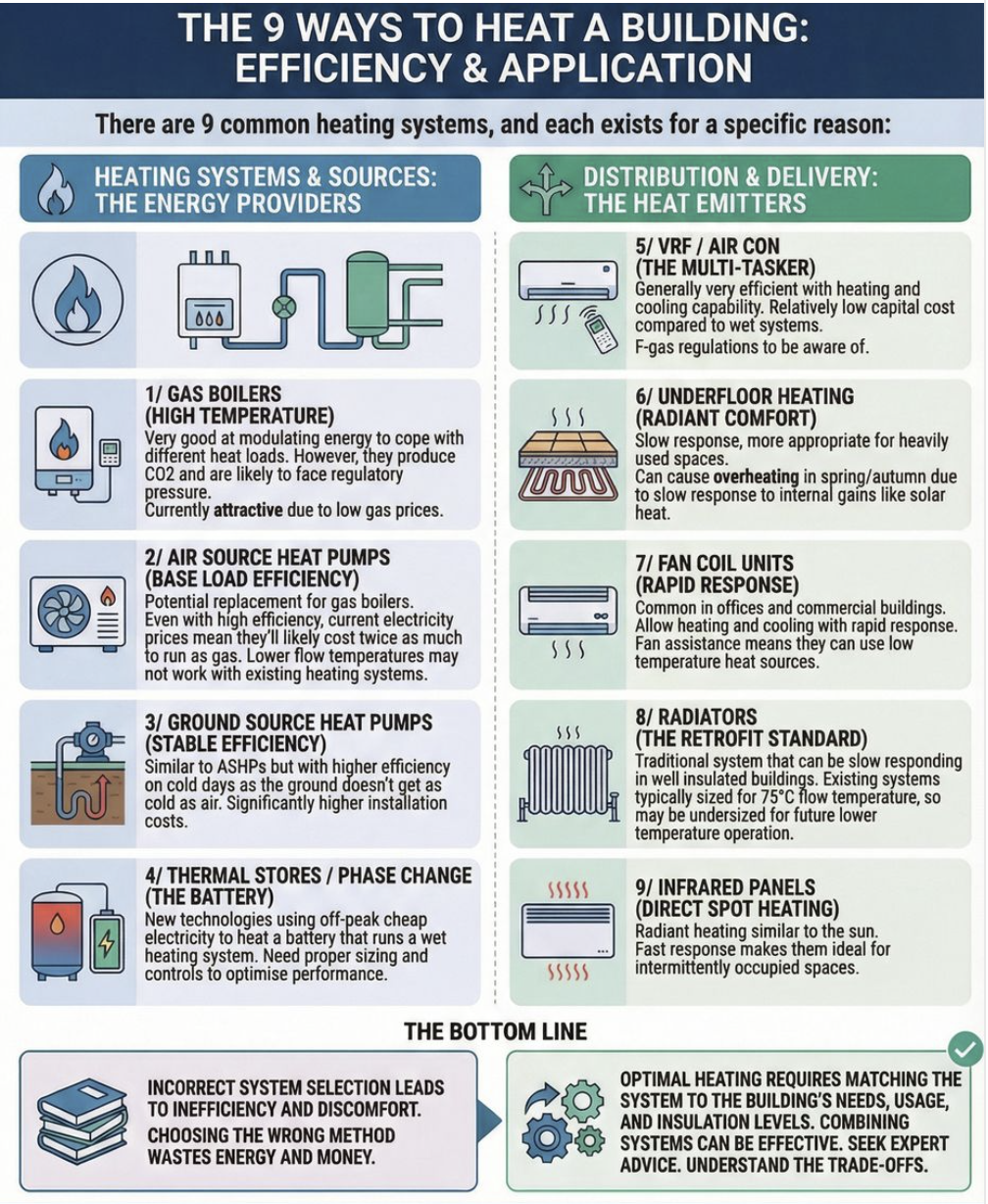
There are 9 common heating systems, and each exists for a specific reason:
1/ Gas Boilers (High Temperature) - Very good at modulating energy to cope with different heat loads. However, they produce CO2 and are likely to face regulatory pressure. Currently attractive due to low gas prices.
2/ Air Source Heat Pumps (Base Load Efficiency) - Potential replacement for gas boilers. High efficiency but current electricity prices mean twice the running cost vs gas. Lower flow temperatures may not suit existing systems.
3/ Ground Source Heat Pumps (Stable Efficiency) - Higher efficiency than ASHPs on cold days as ground stays warmer. Significantly higher installation costs.
4/ Thermal Stores / Phase Change (The Battery) - New technologies using off-peak cheap electricity to heat a battery that runs a wet heating system. Need proper sizing and controls to optimise performance.
5/ VRF / Air Con (The Multi-Tasker) - Very efficient with heating and cooling. Lower capital cost vs wet systems. F-gas regulations apply.
6/ Underfloor Heating (Radiant Comfort) - Slow response, best for heavily used spaces. Can overheat in spring/autumn due to slow solar gain response.
7/ Fan Coil Units (Rapid Response) - Common in offices and commercial buildings. Allow heating and cooling with rapid response. Fan assistance means they can use low temperature heat sources.
8/ Radiators (The Retrofit Standard) - Can be slow responding in well insulated buildings. Typically sized for 75°C flow, so may be undersized for lower temperature operation.
9/ Infrared Panels (Direct Spot Heating) - Radiant heating similar to the sun. Fast response makes them ideal for intermittently occupied spaces.
The question isn't "What heating system should I install?"
The question is: "How much energy does this space need, and how is it used?"
Unfortunately modelling often ignores occupancy and building use.
This leads to wrong systems being installed; higher upfront costs and long-term energy bills.
To get the right system make sure you understand how the building is used as well as its thermal performance.
Great buildings aren't accidental. They're the result of matching technology to need. To chat about how you can match technology to your buildings needs book a call with Joe atamate.com/joe.