The lasting impact of the Alchemai project
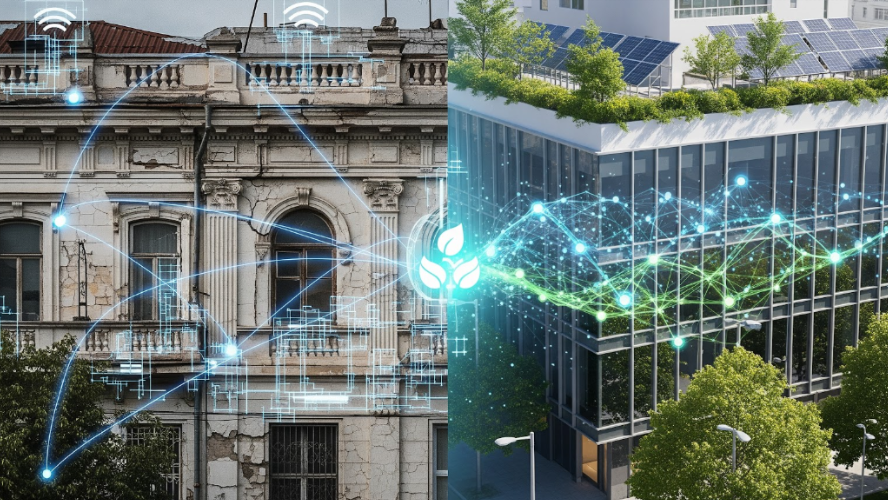
After 18 months, the Alchemai project has successfully concluded, leaving behind a powerful legacy of building intelligence.
Our mission was simple: to use granular data to help building owners make smarter, more sustainable decisions.
The project proved that this approach works, not just in theory but in the real world.
Here’s a look at what we accomplished, the challenges we overcame, and the path forward...

The Power of Data in Action 📊
The core of our success lies in the data. By collecting information on occupancy, thermal comfort, air quality, and energy use, we provided building owners with tangible insights that went beyond a simple energy bill. The data revealed that some buildings are heated unnecessarily, spaces are either over or under-ventilated, and key energy drains often come from unexpected sources like lighting and electrical outlets.
This has been so effective that the project has already spawned a new company, Inform, which will continue to develop the data analysis engine and user interface. We've also built critical relationships with building owners, proving that this data-driven approach is a valuable foundation for future business.
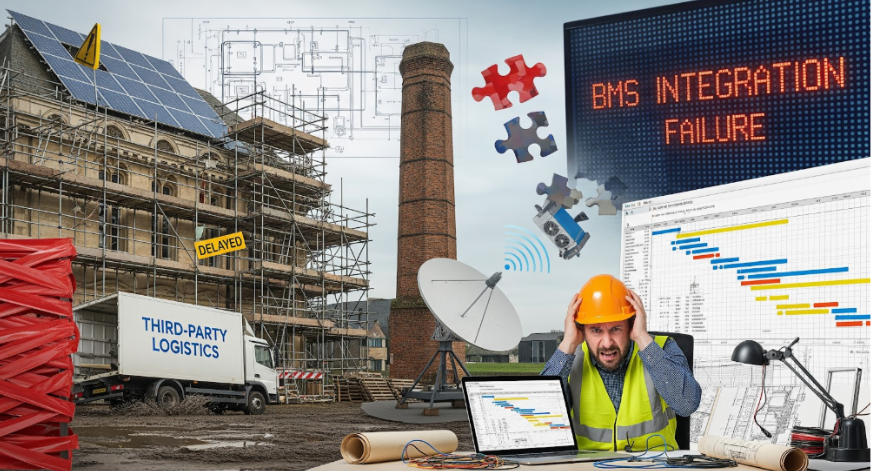
The Real-World Challenges of Decarbonisation
While our data was a success, the project's deployment highlighted the very real, often frustrating, challenges of implementing new technology.
- Logistical Hurdles: We faced significant delays—up to a year in some cases—due to bureaucratic processes, slow internet access, and the difficulty of working with numerous third-party partners.
- Outdated Infrastructure: Many of the buildings had old heating systems and complex Building Management Systems (BMS) that were difficult to integrate with our sensors, slowing down progress.
- A "One-Size-Fits-All" Mindset: We found that some partners were focused on traditional decarbonisation solutions like heat pumps, even when our data showed they weren't the right fit for a particular building, especially older or historic ones.
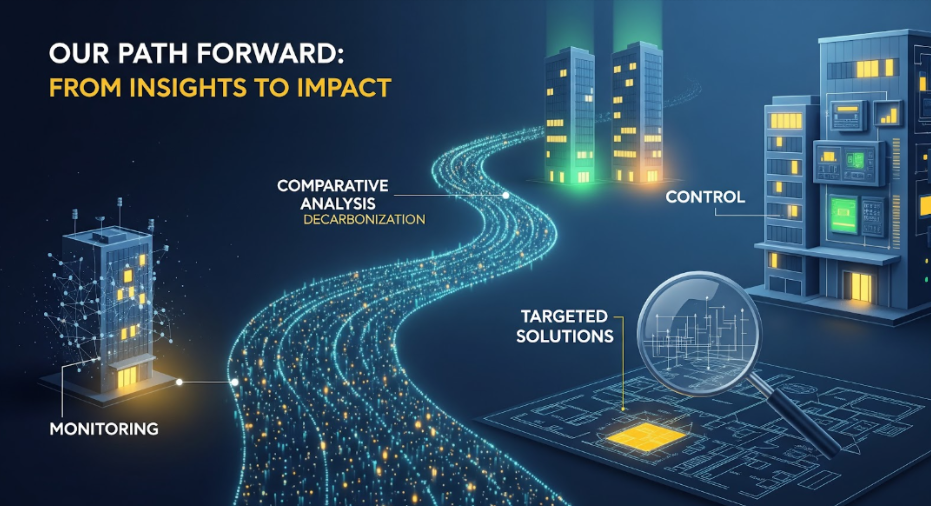
The Alchemai project’s journey doesn't end here. We've identified clear next steps and opportunities to build on our success.
- From Monitoring to Control: Now that our sensors are in place, the next logical step is to expand the system to actively control building services like heating and lighting. This is the most cost-effective way to turn data into direct energy savings.
- Comparative Analysis: Our work with "sister buildings"—two similar buildings where only one is being decarbonised—gives us a unique chance to prove the effectiveness of our approach through direct comparison.
- Targeted Solutions: The granular data allows us to recommend precise interventions for each building, whether it's adjusting a thermostat in an empty room or targeting high-consumption circuits.
As Josh Shimmin, our project manager, puts it, buildings are the "instrument of how we use energy.
The Alchemai project has provided the intelligence needed to make them better—more efficient, healthier, and ultimately, more sustainable. We've laid the groundwork for a future where every building can tell its own story, guiding us toward a greener world.
Want to see how Atamate can help you waste less energy and improve air quality? Call Joe.