What we learned from 3 months of building data

After three months of deep data analysis, the Alchemai project has moved beyond theory and into the reality of building performance. We’ve collected a wealth of data across our four pillars—occupancy, thermal comfort, air quality, and energy use—revealing both significant insights and the real-world challenges of a decarbonisation journey.
Here's a look at our key findings and what comes next.
The Four Pillars: A Snapshot of What We Found
Our diverse portfolio of buildings, from historic town halls to modern leisure centres, has provided a rich tapestry of data.
1. Energy Use
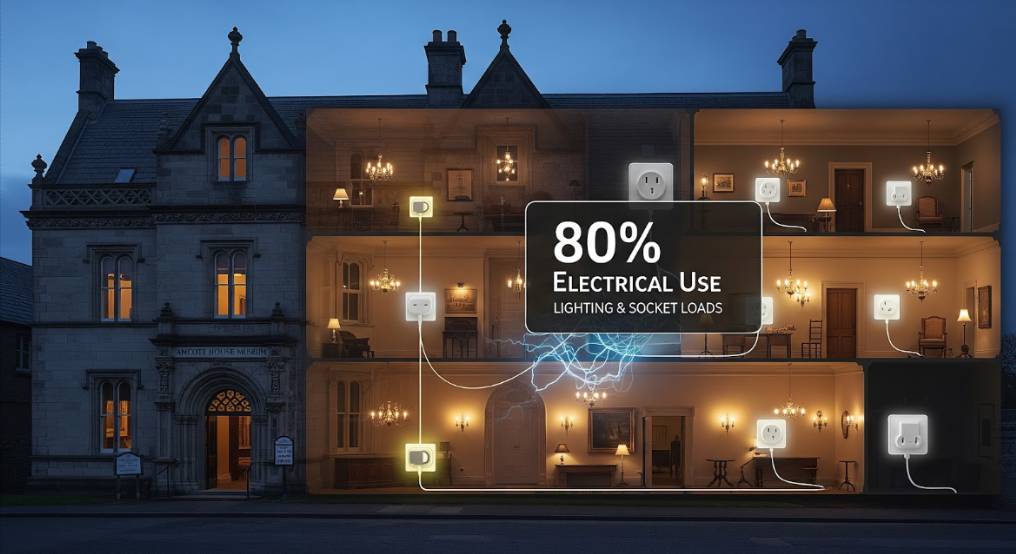
We’ve found that the culprits of high energy bills aren't always what you’d expect. In many of our buildings, lighting and socket loads are the main energy drains.
At the Amcott House Museum, they accounted for 80% of electrical use.
This highlights a clear opportunity to target simple upgrades like smart plugs and motion-activated lighting. We also found some unique, high-consumption loads, like the bar equipment at Retford Town Hall.
A key limitation? We're not yet monitoring gas heating, which is a major energy consumer in many of these buildings. Future efforts will focus on integrating this data for a complete picture.

2. Occupancy
Our data confirms what many suspect: not all spaces are used equally. While offices show consistent, high use, historic buildings like town halls and museums often have very low occupancy.
Some areas were occupied less than 1% of the time.This raises a critical question: why are we heating or cooling these vast, empty spaces?
The data gives building owners the proof they need to adjust service hours and avoid unnecessary energy waste.
3. Thermal Comfort
We've observed a major disconnect between heating for people and heating for buildings.
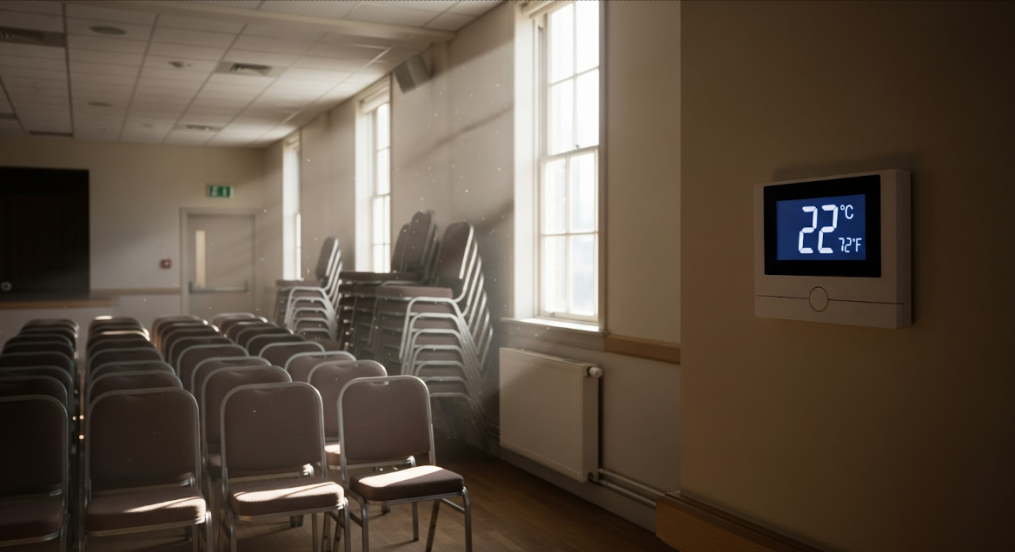
Many of our test buildings, particularly town halls, maintain high average temperatures even when empty.
In one community centre, heating appeared to be for fabric protection (to prevent dampness), but it was still set to a higher-than-necessary temperature.
The data reveals huge opportunities for savings through smarter heating schedules and by implementing zonal controls that heat only the areas in use.
4. Air Quality
The data on air quality presents a paradox.
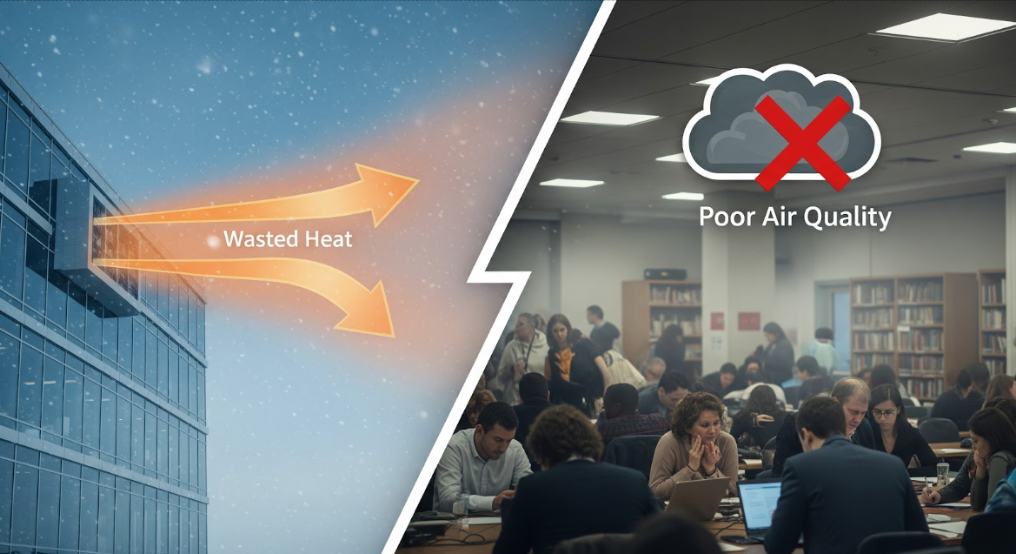
Many buildings are over-ventilated, with sensors showing fresh air levels similar to the outdoors.
This means they are constantly bringing in cold air that needs to be heated.
However, in busy areas like offices and sports facilities, we’re seeing high CO2 levels, suggesting under-ventilation, which can impact health and comfort.
Our findings highlight the need to balance healthy ventilation with efficient energy use.
Navigating the Hurdles and Seizing Opportunities
The Alchemai project is a test of real-world implementation, and we’ve faced some tough challenges:
- Bureaucracy and Delays: Installing sensors at scale was a major hurdle, with some installations taking nearly a year due to complex processes with third-party partners and councils.
- Old Infrastructure: Outdated heating systems and existing building management systems can make it difficult to integrate new monitoring and control technologies.
- Project Focus: At times, our partners have focused on high-tech decarbonisation solutions (like heat pumps) for buildings that simply aren't suitable for them, highlighting the need for a more holistic, data-driven approach.
Despite these challenges, the opportunities are clear. The data has been invaluable for building owners, empowering them to make informed decisions. The project also allows for direct comparison between similar buildings, providing a unique insight into the effectiveness of different interventions. This granular data enables us to move beyond a one-size-fits-all approach and craft targeted strategies for each unique building.
What's Next for Alchemai?
We are now focused on refining our data, completing our remaining installations, and scheduling a deeper dive into summer-period data. Our goal is to move beyond simply identifying problems and begin implementing the cost-effective control solutions that our data clearly supports.
The Alchemai project is proving that the most effective decarbonisation strategies are not about big, flashy tech - they're about getting smart with the data you have.
Want to see how Atamate can help you waste less energy and improve air quality? Book a call with Joe.